


How to Know What Engagement Ring You Want: A Detailed Guide to Finding Your Perfect Ring
Choosing an engagement ring can feel like a big task, especially with so many beautiful options out there. Whether you prefer something classic, modern, or a bit unique, the most important thing is that your ring feels right for you and fits your everyday style. The best way to know what engagement ring you want is to pay attention to what catches your eye, think about your lifestyle, and try on different rings to see what feels comfortable and special.
You might be drawn to a certain metal, shape, or setting, or you could realise you want something that’s easy to wear day after day. It can help to take inspiration from rings you see online or in shops, chat with friends, or even take a style quiz for fun ideas.
If you’re looking for guidance or a personal touch, shops like Mintique of Cambridge are always happy to help you find a ring that suits your taste and budget.
Understanding the Basics of Engagement Rings
When you’re thinking about buying an engagement ring, there’s a lot to learn. You’ll want to know what makes a ring special, what to look for in quality, and what styles fit your taste best.
What Is an Engagement Ring?
An engagement ring is more than a beautiful piece of jewellery. It’s a symbol of love and your intention to spend your life with someone. Most often, people choose a ring with a diamond, but there are many other gemstones and personal touches you can add too.
Engagement rings have a long history and meaning for many couples. The tradition of giving a ring to show commitment dates back centuries, and some couples even choose vintage pieces or rings made from unique materials, such as bespoke coin rings that carry historical meaning—adding a special story to your own unique ring.
Choosing the right engagement ring feels personal for everyone. It’s about expressing your story, values, and style, whether you want something classic or completely one-of-a-kind.
Key Elements of the Perfect Engagement Ring
When picking out an engagement ring, you’ll want to consider the four Cs: cut, colour, clarity, and carat weight. Together, these affect how a diamond sparkles and how much it costs. Here’s a quick look at what each means:
| Feature | What It Is |
|---|---|
| Cut | How well the diamond is shaped and how it reflects light |
| Colour | How clear or tinted the diamond appears |
| Clarity | How many tiny flaws or inclusions are in the stone |
| Carat Weight | How much the diamond weighs (bigger is not always better) |
Pay attention to the diamond quality and the setting too. The setting holds the diamond in place and can make the stone look larger or add extra sparkle. Think about what matters most to you—some people care most about size, others about sparkle or a certain style.
Popular Ring Styles and Designs
There are some classic designs you’ll see again and again. Solitaire engagement rings have a single diamond and look simple and timeless. Other people love the halo setting, which has smaller diamonds around the centre stone for more sparkle.
Vintage-inspired rings can bring a sense of history and elegance, while unique rings might use coloured stones, special metalwork, or creative settings. Some rings even mix metals or use unusual diamonds for a truly personal touch.
The right design is the one that suits your hand, your daily life, and, most importantly, your personal style. Try on a few different types to see what feels right for you. Sometimes, the choice will just “click.”
Deciding What You Really Want
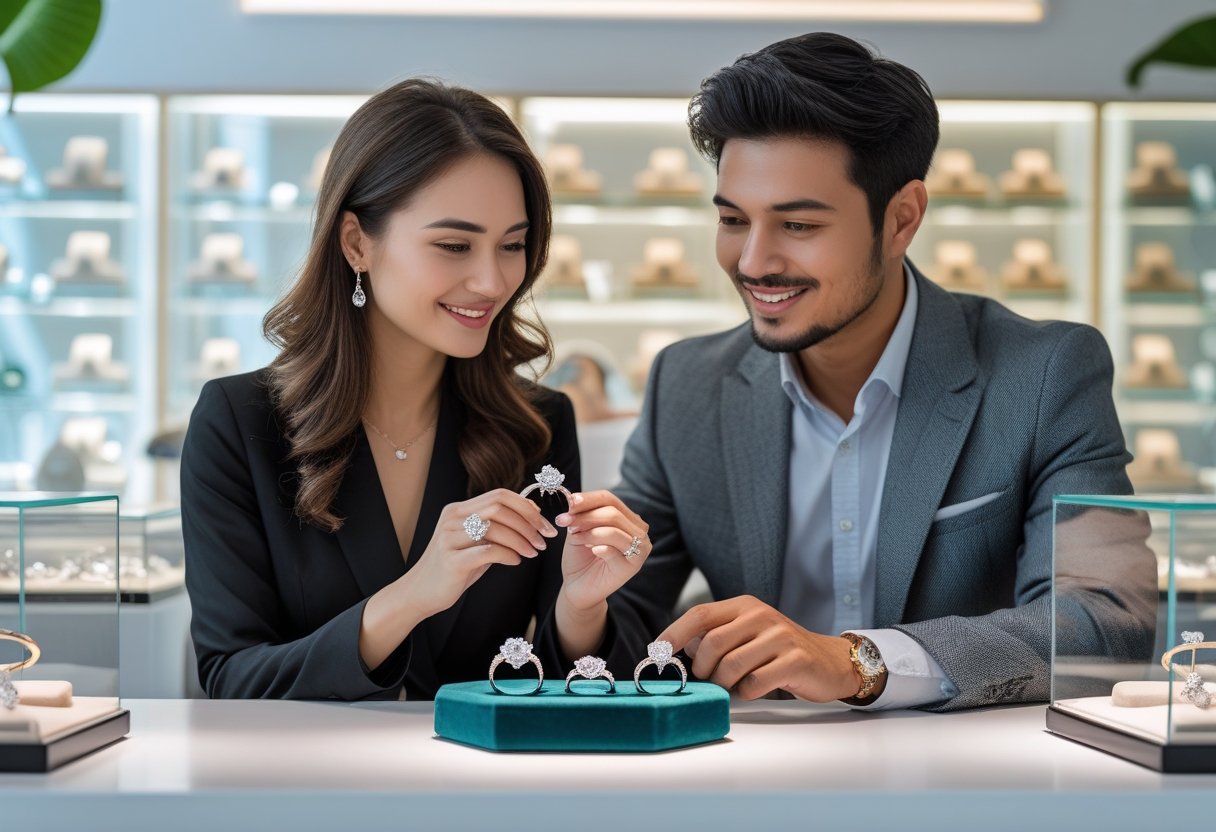
It can be tricky to figure out what kind of engagement ring feels most like you. There are a few ways you can narrow down options and make your choice easier, even if you’re starting with no idea at all.
Reflecting on Your Personal Style
Think about the jewellery and clothes you usually wear each day. If you love simple and classic pieces, you might prefer a plain solitaire ring or a band with a single stone. If you like bolder looks or trends, you could consider rings with unique shapes or a setting that stands out.
It helps to look at your lifestyle too. If you use your hands a lot at work or during hobbies, a ring with a low setting or simple design may be best. Also, consider what metals work well with your wardrobe—do you usually wear gold, silver, or rose gold?
You might also enjoy options that have a story behind them, like coin engagement rings, which mix a touch of history with modern style. These simple and unique engagement rings can suit someone who wants something a little different yet not too flashy.
Considering Your Partner’s Style and Hints
If you hope to surprise your partner, pay attention to the subtle hints they drop. Notice the jewellery they wear most days. Is it classic, vintage, modern, or even colourful? Some people leave clues in conversations, while others might share photos on social media or leave magazines open to favourite styles.
It can help to ask their friends or family for ideas or opinions. Many couples visit shops together, even if the final purchase is a surprise. You could also ask your partner directly for guidance; some people appreciate being part of the process and knowing what to expect.
Make a note of any “must-haves,” like a diamond shape, a certain type of metal, or something sentimental, such as an inherited stone. This helps prevent guesswork when you’re actually shopping.
Finding Inspiration and Saving Ideas
Start looking at images of rings online or in magazines. Creating a small mood board on your phone or in a notebook can help you spot patterns in what you’re drawn to. Save photos, screenshots, or even sketches—no detail is too small if it speaks to you.
When saving ideas, pay attention to elements like stone cut, metal, and the overall feel of the ring. Is it vintage, modern, delicate, or bold? Also, look for unexpected options, such as coloured gemstones or mixed metals, if they fit your style.
Share your favourites with someone you trust. Sometimes they notice details and common themes you might miss. Bring your saved ideas along when you visit a jeweller or browse shops—it makes talking about your likes so much easier and less overwhelming.
Setting a Realistic Budget
Buying an engagement ring means thinking about what you can spend and how to make your choice feel special. Setting a budget helps you avoid stress and find a ring with style and meaning, not just a price tag.
How to Set a Budget and Stick to It
Start by looking at your finances honestly. Write down what you can save each month and what other costs you have. It’s common for people to wonder if they should follow rules like “three months’ salary”. That’s only a suggestion—not a rule.
It helps to decide on a comfortable number with your partner if you’re shopping together. Talk openly about what matters most to you both, like the diamond size or the style.
List all possible costs for the ring, such as resizing, engraving, a warranty, or insurance. Build a small cushion into your budget for hidden expenses. Comparing rings in different metals, like gold, platinum, or even budget-friendly options such as sterling silver coin rings, can lower costs without losing quality.
Once you know your budget, stick to it when you visit shops or browse online. If a ring is too expensive, you can often choose a simpler setting or a smaller stone.
Balancing Cost With Quality
Quality is not only about the size of the diamond. Focus on what matters to you—shape, setting, and materials all affect both look and price. Some shapes, like oval and pear, often cost less than round diamonds.
Always ask for a diamond grading report or a diamond certificate, which helps you understand the quality you’re getting. This also helps when comparing rings in your price range.
Sometimes, working with a diamond expert can help you find better value. They can explain what details, like “clarity” or “colour”, matter most so you don’t overspend where it won’t be noticed.
Don’t forget to ask about warranty options. If you buy smart, you can get a beautiful ring that fits your budget and lasts for years.
Exploring Ring Settings and Styles
Picking the right ring setting is about matching your personal style and everyday needs. Each setting has special features that can change how the ring looks and feels, from classic prongs to striking halos.
Classic and Contemporary Settings
Classic settings like the solitaire put the focus squarely on the diamond. A simple band with a single stone is timeless and goes with almost everything. If you want something more protective, a bezel setting wraps the diamond in a thin metal border, offering both security and a modern look.
Contemporary styles add details for more sparkle or texture. The halo setting, for example, surrounds the centre diamond with a ring of smaller stones. This makes the main diamond look bigger and can bring lots of brightness. Pavé bands have tiny diamonds along the band, adding continuous shimmer. For something truly different, you can look at unique wedding bands, such as coin rings made from vintage coins, for a touch of personality.
Understanding Engagement Ring Settings
Settings keep diamonds in place and shape the overall ring style. A prong setting, using tiny metal claws, holds up the diamond and lets in more light, which boosts sparkle. This is popular with round and oval shapes but works with almost any cut.
A bezel setting fully surrounds the stone and offers extra protection, making it great for active lifestyles or if you want a sleek look. Halo settings create the illusion of a larger diamond while adding a vintage vibe. Channel settings set small diamonds into a groove in the band, protecting the stones and giving a streamlined effect. Your choice of setting style affects not just the look, but also comfort and how easy the ring is to clean day to day.
Choosing the Right Gemstone and Diamond
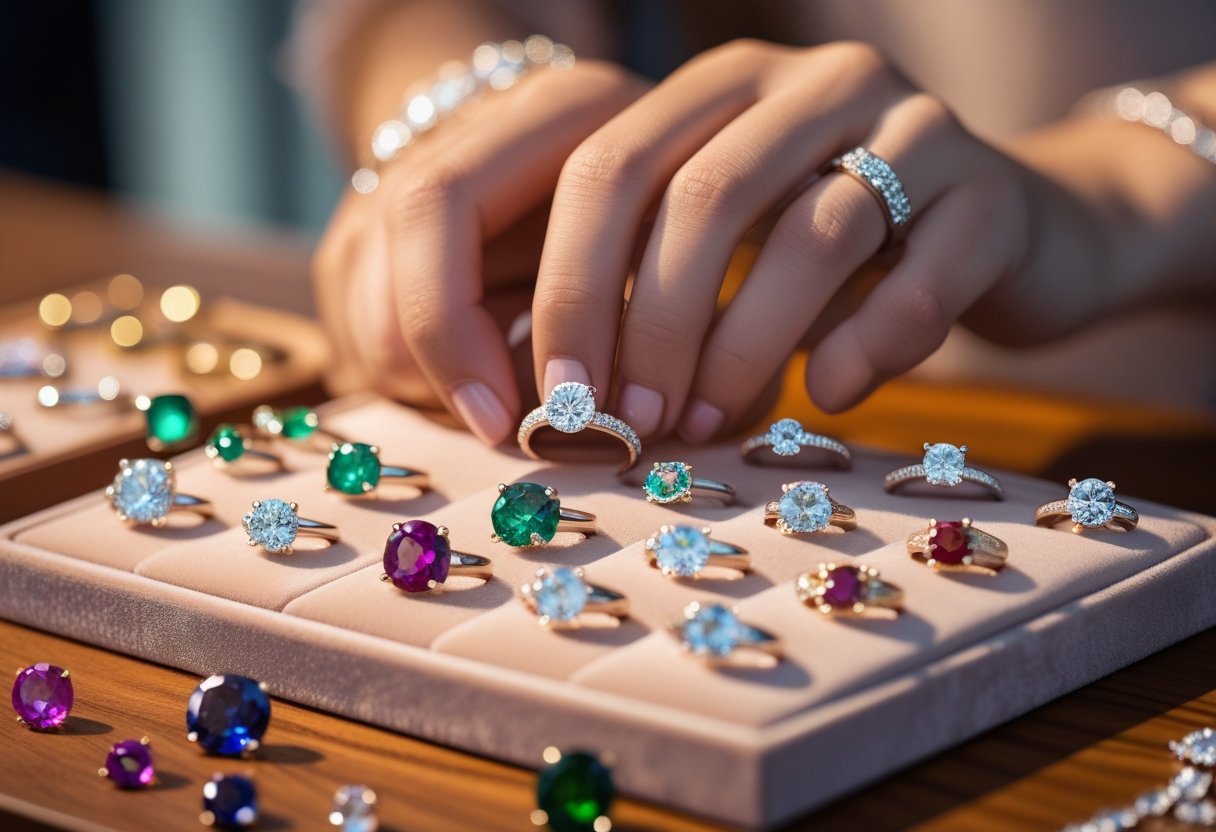
Picking a stone for your engagement ring comes down to what feels right for you. You can choose from classic diamonds in different cuts, or colourful gemstones that give your ring a unique style.
All About Diamond Shapes and Cuts
Diamonds are loved for their sparkle, and how they are shaped and cut makes a big difference. The round brilliant cut is the most popular because it shines the brightest. Other shapes like oval, emerald cut, and marquise cut offer a different look and can even make the stone look bigger.
- Step cut diamonds, like the emerald shape, have a clean and modern look.
- Pear-shaped and marquise stones add a touch of flair and can make your fingers look longer.
- Each shape sparkles in its own way, so it’s good to see them in person if you can.
- Always check for a diamond certificate—it tells you about the quality, including the cut, clarity, colour, and carat.
If you like something classic, go with a round brilliant. If you want a vintage or bold style, try a different shape.
Gemstones Beyond Diamonds
Diamonds are the traditional choice, but gemstones bring colour and personality. Sapphires come in shades of blue, pink, and even yellow. Emeralds look deep green and feel special with their rich tone.
You might like moissanite if you want lots of sparkle at a lower price—it's nearly as bright as a diamond. Coloured diamonds are another option if you want something rare and striking.
Here’s a quick comparison:
| Stone | Popular Colours | Hardness | Unique Point |
|---|---|---|---|
| Diamond | White, Fancy | 10 | Classic, very durable |
| Sapphire | Blue, Pink | 9 | Bold colour, strong |
| Emerald | Green | 7.5-8 | Deep colour, vintage feel |
| Moissanite | Near Colourless | 9.25 | Extra sparkle, budget buy |
Every stone feels different on your hand, so try a few and trust your gut when you find the one you love most.
Selecting Your Metal and Colour
Choosing the metal for your engagement ring sets the tone and style for your piece. Your decision will affect durability, maintenance, and how the ring looks on your hand.
Popular Metals for Engagement Rings
There are a few classic choices for engagement ring metals, each with its own character. Yellow gold is a traditional favourite, known for its warm glow and timeless feel. If you want something a bit more unique, rose gold offers a subtle pink tint that looks especially pretty on many skin tones.
White gold is loved for its cool, silvery appearance, often paired with diamonds for a bright, modern look. Platinum is another popular choice, especially for those looking for something hard-wearing and hypoallergenic. Platinum engagement rings tend to be a bit heavier and more durable over the years. Palladium is similar to platinum, with a lighter weight and a lower price.
Sterling silver can also be a good option if you’re on a budget or want something less traditional. If you’re curious, you might want to find out more about the qualities of sterling silver rings.
Here’s a quick comparison:
| Metal | Appearance | Durability | Price |
|---|---|---|---|
| Yellow Gold | Warm, classic | Medium | Medium |
| White Gold | Bright, modern | Medium | Medium |
| Rose Gold | Pinkish, soft | Medium | Medium |
| Platinum | Silvery, luxe | High | High |
| Palladium | Grey-white | High | Medium-High |
| Sterling Silver | Silvery, soft | High | Low |
How Metal Colour Impacts Your Ring
The colour of your ring metal will change the whole look of your engagement ring. You’ll want to pick a tone that matches your style and works well with your skin undertones. If your skin has warm undertones, yellow gold and rose gold may suit you best. Cool undertones often pair nicely with white gold, platinum, or palladium.
Think about how your ring will look with other jewellery you wear every day. Many people pick a metal that matches their watch or other rings.
18k gold is a common pick because it has a rich colour but is harder than pure gold. If you prefer something lighter and affordable, sterling silver might work for you. Just keep in mind it’s softer and needs more care compared to platinum or gold.
Your choice of metal also affects things like resizing or repairs over time, so it’s helpful to ask your jeweller about care tips and if the metal fits your lifestyle before making your final pick.
Figuring Out Ring Size and Comfort
It’s easy to get caught up in the beauty of an engagement ring, but making sure it fits well is just as important as how it looks. A comfortable fit will make you want to wear your ring every day.
How to Get the Right Ring Size
To find your ring size, measure the circumference of your finger with a soft tape measure or a strip of paper. Wrap it around the base of your finger and mark where it overlaps. Then, measure that length in millimetres.
If you already have a ring that fits well, measure the inside diameter and compare it to a ring size chart. This approach works best if the ring is worn on the same finger.
Mintique of Cambridge uses a unique method to ensure that your ring arrives fitting perfectly. Find out more about the Perfect Fit Method. Comfort is key, so try your ring on at different times of day, since finger size can change with temperature and activity.
If the ring feels too tight or loose, resizing is usually possible. Just check with your jeweller first, since some ring designs or metals are harder to resize than others.
Making the Final Choice
After you’ve looked at lots of styles and thought about your daily life, the real decision is about putting your favourites side by side and thinking about the ring you’ll love for years. It helps to look at not just the look of the ring, but also the little details that matter in day-to-day life.
Comparing Favourites and Narrowing Down

Bring together a list of your top picks—these might be saved photos or a table of key details like stone shape, setting, and band metal. Lay them out so you can see all the options at once.
Ask yourself what draws your eye again and again. Do you prefer solitaire or halo settings? Is a classic round diamond more you than an oval or emerald cut? This is also when practical questions matter: Which rings feel comfortable to wear? Are some settings likely to snag on clothes or gloves?
Talking things over with a trusted friend can help, too. Sometimes they remember what you liked a month ago when you forgot. If you have been visiting jewellers, return for a second try-on. The ring you keep picking up is probably your answer.
If you’re thinking about how your engagement ring will look next to a wedding band, ask if you can try sets or see how they pair together. Make sure your favourite looks just as good alone as it does as part of a pair.
Thinking About Future Considerations
Resizing is something to keep in mind. Fingers can change size over time, so check if resizing is easy for the ring you love. Settings with stones around the full band, for example, can be hard to resize. Ask the jeweller about what’s involved.
You’ll also want to look at the warranty and how repairs are handled. Does the shop offer a warranty that covers lost stones or replacement? Find out how they support you if your ring needs fixing.
Think about your lifestyle, too. If you work with your hands a lot, a low-profile setting or a smooth band might suit you best. Also, make sure to learn about care and maintenance, as keeping your ring sparkling is part of enjoying it every day.
If you’re already thinking ahead to popping the question, you might like reading about how to propose to make the moment just right.
Choosing your ring isn’t only about the style or sparkle—it’s about having something that fits your life and feels special for years to come.
Trends, Tips, and Timing
Picking out an engagement ring can feel a bit overwhelming, especially with all the choices out there. Thinking about both what’s popular and when to shop will help you feel more confident and prepared.
Current Engagement Ring Trends
Unique rings are popping up everywhere right now. Couples are drawn to options that feel truly personal and meaningful. Handmade bands, custom engravings, and even rings crafted from historic coins, like sixpence rings, are gaining popularity for their sentimental touch. If you’re curious about special pieces with a story, some of the latest handmade jewellery trends even include coin rings.
Coloured stones are having a big moment as well. Sapphires, emeralds, and coloured diamonds are showing up in more engagement rings as couples look for a pop of colour. Vintage styles are also coming back, with intricate settings and old-fashioned cut diamonds. You’ll also see minimal bands for a classic look and non-traditional shapes for something a bit more fun.
Shopping Tips and Best Times to Buy
Knowing when and how to shop makes a real difference. Black Friday sales and holiday periods often bring significant discounts, so planning your purchase around these times might save you money. Make sure you do a bit of research on the 4 Cs—cut, colour, clarity, and carat size—so you know what matters most.
Get the right ring size early on; it saves effort later. It’s a smart idea to look into insurance for your ring once you buy it. Don’t forget to check if a historic coin or vintage piece appeals to you, as some jewellers turn old coins into beautiful bands. Stories like the tradition behind the sixpence coin can add extra meaning to your ring. Always compare different shops and read reviews to make sure you’re getting the best quality and value.
Frequently Asked Questions
Finding the right engagement ring can feel personal. You might be thinking about what will look flattering, match your style, and fit your budget. Getting the right size and shopping in a way that feels true to you is also really important.
What styles of engagement rings look best on my hand?
Certain ring shapes can flatter different finger types. For example, if your fingers are long and slender, round or cushion shapes look lovely. Shorter fingers can look longer with oval or marquise shapes. Wider bands might suit larger hands, while a delicate band can look beautiful on smaller hands.
It often helps to try rings on and notice what feels and looks right to you.
How do I choose the perfect engagement ring that reflects my personality?
Think about your daily style. Do you like things simple, vintage, or bold? A classic solitaire suits someone who likes timeless pieces. Halos or unique settings can feel more playful or glamorous. If you love vintage, art deco designs or antique rings could be a good match.
You can even bring pictures of jewellery you love when you shop.
Can you help me understand the golden rules for selecting an engagement ring?
Know your budget before you start shopping. Learn about the 4Cs of diamonds: cut, colour, clarity, and carat. Choose a trustworthy shop or jeweller with good reviews. Ask questions if you're not sure about something.
It's always a good idea to think about what you or your partner will want to wear every day, not just what looks impressive at first glance.
What's a fun way to discover what engagement ring would suit me or my partner?
Make a mood board using photos from magazines or online. Try on different styles at a jeweller just for fun with a friend—even if you're not ready to buy. You can also take online style quizzes to see what matches your taste.
Looking at your current jewellery and what you wear often can give clues too.
Is there a guide to finding out her engagement ring size discreetly?
Borrow a ring she wears on her ring finger and take it to a jeweller. You could also trace the ring on a piece of paper. Some people ask friends or family for help—they might already know. There are printable ring size guides online, but a jeweller can measure accurately if you bring in a ring.
If in doubt, choose a slightly bigger size, as it's easier to resize a ring to be smaller.
How much should I realistically spend on an engagement ring?
There's no strict rule on how much to spend, so try to stick to what feels comfortable for you. Some people follow the "two months' salary" idea, but that's not necessary. Be honest about your budget at jewellery shops so you only see options that are a good fit.
A beautiful ring doesn't have to mean spending more than you can afford.


